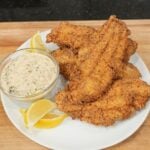
Southern Fried Catfish with Homemade Tartar Sauce
Crispy cornmeal-crusted catfish fried until golden and served with a creamy, tangy homemade tartar sauce.
Servings: 4
Ingredients
- 2 lbs catfish fillets
- 1½ cups yellow cornmeal
- ½ cup all-purpose flour
- 1½ teaspoon seasoned salt
- 1 teaspoon garlic powder
- 1 teaspoon onion powder
- 1 teaspoon paprika
- ½ teaspoon black pepper
- ½ teaspoon cayenne optional
- 2 eggs
- ¾ cup buttermilk
- Neutral oil for frying
- Tartar Sauce
- 1 cup mayonnaise
- 2 tablespoon sweet pickle relish
- 1 tablespoon capers chopped
- 1 tablespoon lemon juice
- ½ teaspoon lemon zest
- Salt & pepper to taste
Instructions
- Start by patting the catfish fillets completely dry with paper towels. This step matters because excess moisture will keep the breading from sticking and can cause oil splatter during frying. If the fillets are large, cut them into evenly sized pieces so they cook at the same rate. Lightly season both sides with salt and black pepper — this ensures the fish itself is seasoned, not just the crust.
- In a shallow dish, combine the cornmeal, flour, seasoned salt, garlic powder, onion powder, paprika, black pepper, and cayenne if you’re using it. Mix thoroughly so the seasoning is evenly distributed throughout the dredge. In a separate bowl, whisk together the eggs and buttermilk until smooth. The buttermilk keeps the catfish mild and juicy while helping the breading adhere evenly.
- Dip each piece of catfish into the egg wash, letting any excess drip off before placing it into the cornmeal mixture. Press the fish firmly into the dredge so every surface is coated — don’t just dust it. Shake off any loose breading and place the coated fish on a wire rack. Let it rest for 5 to 10 minutes; this short rest helps the coating set and prevents it from falling off in the oil.
- Heat neutral oil in a heavy skillet or Dutch oven to 350°F. Fry the catfish in batches, making sure not to overcrowd the pan, which would drop the oil temperature and lead to greasy fish. Cook each piece for about 3 to 4 minutes per side, turning once, until the crust is deep golden brown and crispy and the internal temperature reaches 145°F. Transfer the fried catfish to a wire rack, lightly season with salt while hot, and repeat with the remaining pieces. Serve immediately with homemade tartar sauce and lemon wedges.
Notes
- Resting the breaded fish helps the coating stick.
- Reheat leftovers in an oven or air fryer for best texture.
Nutrition
Calories: 960kcal | Carbohydrates: 63g | Protein: 50g | Fat: 56g | Saturated Fat: 10g | Polyunsaturated Fat: 29g | Monounsaturated Fat: 14g | Trans Fat: 0.1g | Cholesterol: 242mg | Sodium: 1524mg | Potassium: 1164mg | Fiber: 7g | Sugar: 6g | Vitamin A: 789IU | Vitamin C: 4mg | Calcium: 113mg | Iron: 4mg
