
This post contains affiliate links. Please see our disclosure policy.
Quick Summary
In This Recipe
- Beef Ribs 101: Know Your Cut Before You Cook
- Why This Oven Beef Ribs Recipe Works
- Ingredients You'll Need
- Beef Ribs Substitutions and Variations
- How to Make Oven Beef Ribs Step by Step (Simple Sunday Cookout Version)
- Restaurant-Style Beef Ribs with Asian BBQ Glaze
- Pro Tips for Perfect Beef Ribs
- Storing and Reheating Beef Ribs
- Frequently Asked Questions
- Related Recipes
- Get the Full Recipes
My pork rib recipes have done millions of views over the years, but oven beef ribs are a different beast — bigger, richer, more forgiving, and frankly more impressive when they hit the table. The...
Category: Beef Recipes, Dinner | By: Matt Price, Mr. Make It Happen
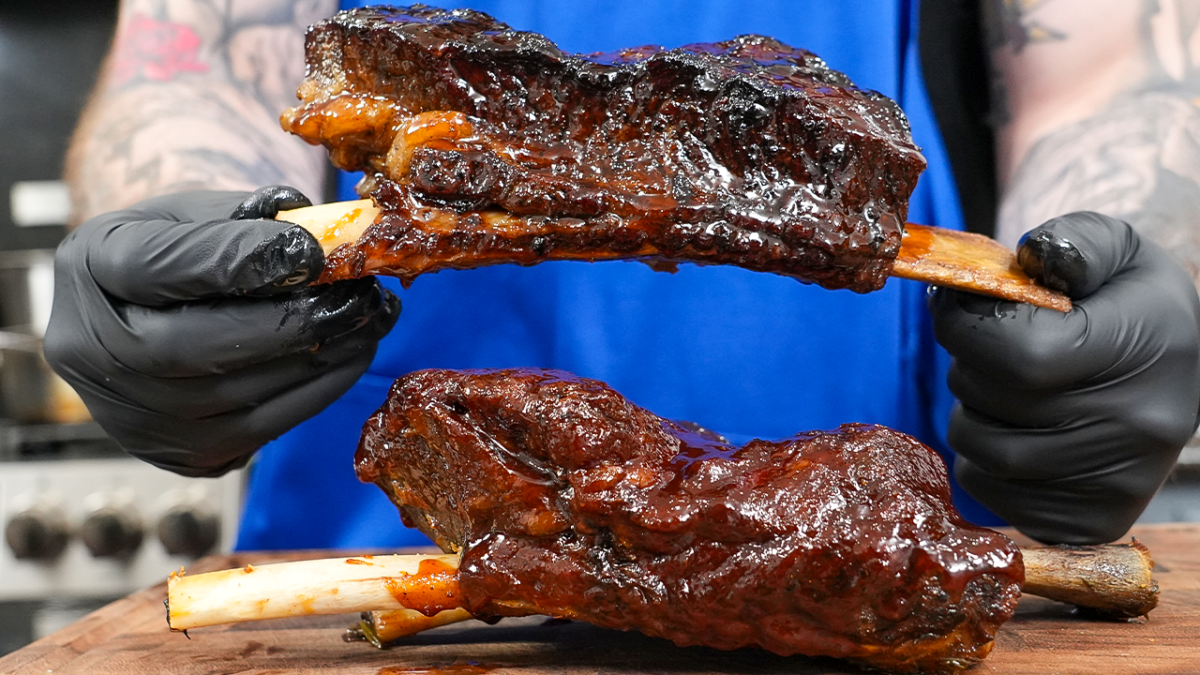
My pork rib recipes have done millions of views over the years, but oven beef ribs are a different beast — bigger, richer, more forgiving, and frankly more impressive when they hit the table. The catch is most people think you need a smoker to make great beef ribs at home. You don't. In this post I'm going to show you my simple Sunday cookout oven recipe that delivers fall-off-the-bone tender ribs with serious bark — and then I'm going to take it to the next level with the restaurant version I serve at Fraiche DC, finished with a from-scratch Asian-style BBQ glaze. Both come out of the oven. Both are weekend-project worthy.
Beef Ribs 101: Know Your Cut Before You Cook
What are the different types of beef ribs? There are three main types. Short ribs are the most common — meaty, well-marbled, and cut from the chuck or plate primal. Next up, back ribs come from the rib roast section and have less meat between the bones but excellent flavor. Finally, plate ribs (also called "dino ribs") are massive, four-bone roasts cut from the short plate — the Rolls Royce of beef ribs, with incredible marbling and serious presence on the plate. In fact, this recipe works with all three, but plate ribs are the showstopper.
- Also, look for uniform thickness. Butchers sometimes pass off ribs that are thick on one end and thin on the other. Pick a rack or roast that's even from end to end — it cooks more predictably.
- Additionally, trim the hard fat, save it. The fat cap on beef ribs has a lot of hard fat that won't render in oven cooking. Trim it off and render it down for beef tallow — incredible for frying potatoes or searing steaks.
- Of course, plate ribs are an investment. A four-bone plate rib roast can run $80-150 depending on quality and your butcher. Don't rush them. Don't undercook them. This is a recipe to commit to.
Why This Oven Beef Ribs Recipe Works
- The salt brine. Heavily salting the exterior and resting the ribs in the fridge for 4-24 hours pulls moisture out, then lets the salt-saturated moisture get reabsorbed — effectively seasoning the meat all the way to the bone. It's the single biggest upgrade you can make to oven beef ribs.
- Steam-then-bark technique. Covered cooking in beef stock gets the connective tissue breaking down without drying out the meat. Uncovering at the end resets the bark and finishes the crust.
- Probe tender, not temperature alone. Beef ribs are done when a probe slides in and out with almost no resistance — typically around 203-205°F internal temp. Don't pull them just because they hit a number.
Ingredients You'll Need
For the simple Sunday cookout oven beef ribs:
- 1 four-bone plate rib roast or 1 rack of beef back ribs (~4-6 lbs)
- Kosher salt (heavy hand)
- 1 teaspoon MSG (optional, but recommended)
- 2 tablespoon smoked paprika
- 3-4 tablespoon BBQ Seasoning (or your favorite BBQ rub)
- 2 cups beef stock
- 1 yellow onion, quartered
- 4 cloves garlic, smashed
- 2 sprigs fresh thyme
- Your favorite BBQ sauce for finishing
Restaurant-Style Ingredients
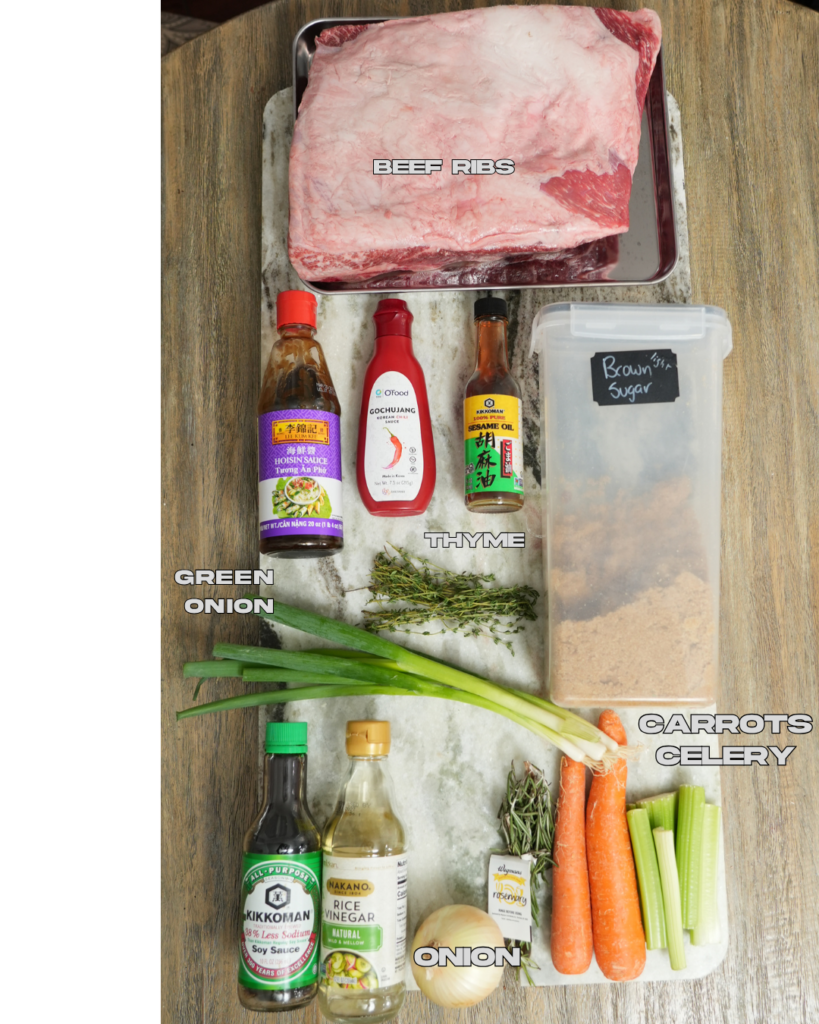
For the restaurant-style Asian beef ribs (additional ingredients):
Braising liquid:
- 1 yellow onion, rough chopped
- 3 carrots, rough chopped
- 3 stalks celery, rough chopped
- 1 bunch green onions
- 1 tablespoon whole black peppercorns
- 4 cups beef stock
- 1 teaspoon red pepper flakes
- 3 tablespoon rice vinegar
- 1 tablespoon roasted garlic Better Than Bouillon (or beef base)
- ¼ cup low-sodium soy sauce
- 3 tablespoon brown sugar
Asian BBQ glaze:
- ⅓ cup brown sugar
- ½ cup hoisin sauce
- 2 tablespoon rice vinegar
- 1 tablespoon fish sauce
- 2 tablespoon gochujang (Korean fermented chili paste)
- 1 tablespoon AP Seasoning (for the initial sear)
Beef Ribs Substitutions and Variations
- No plate ribs? Beef back ribs work great and are cheaper. Reduce cook time to ~3 hours since they're smaller.
- Short ribs. Cut the cook time to 2.5-3 hours and cook them bone-side down. Same brine and seasoning approach.
- Skip the MSG. Totally optional. The salt brine alone gets you 90% of the way there.
- No oven? Use a smoker. 225-275°F, same time range, same probe tenderness target. You'll just gain real smoke flavor and skip the paprika.
- Missing gochujang? Sub Sriracha or sambal oelek. Different heat profile but works.
- Out of hoisin? Sub plum sauce or a 50/50 mix of soy sauce and brown sugar. Not identical but close.
- Alternatively, go lighter. Skip the sauce finish entirely. The brined and seasoned ribs are excellent on their own.
How to Make Oven Beef Ribs Step by Step (Simple Sunday Cookout Version)
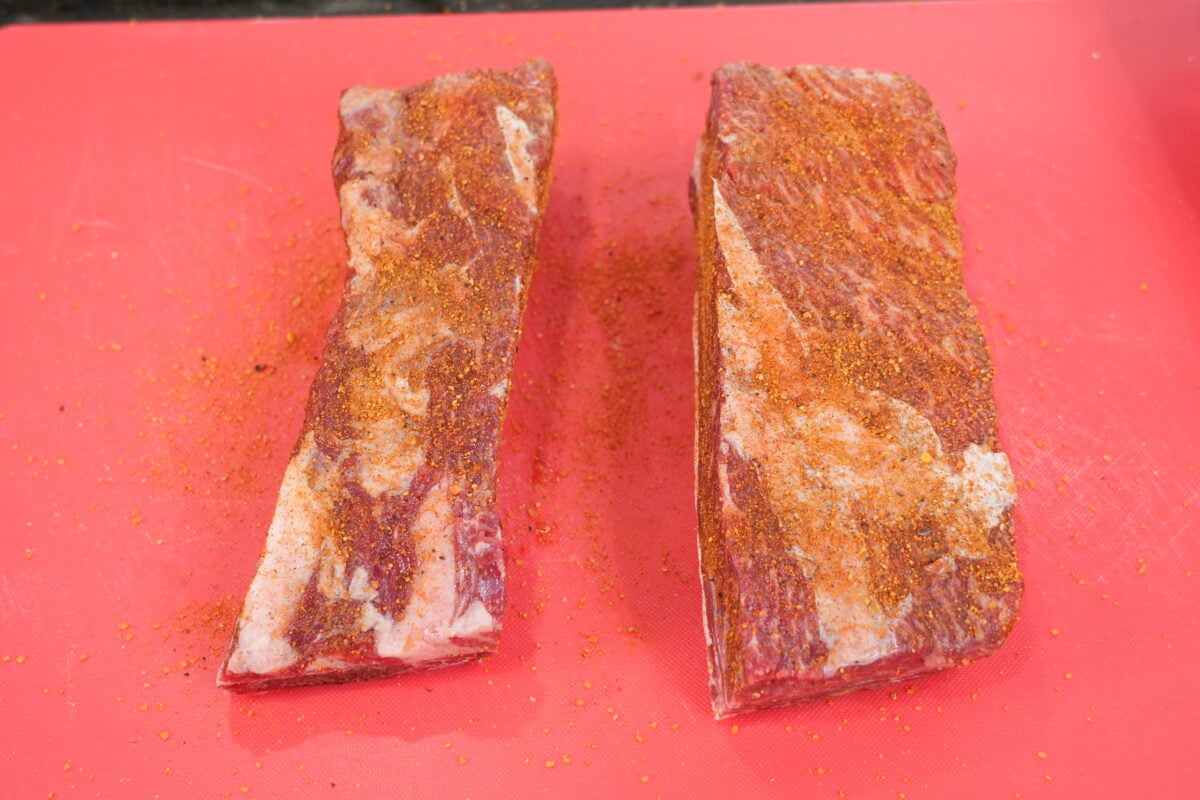
- Brine the ribs (4-24 hours ahead). Pat the ribs dry. Trim any thick hard fat off the cap. Season heavily on all sides with kosher salt — heavier than you think. Place uncovered on a wire rack over a sheet pan and refrigerate. The salt pulls moisture out, then gets reabsorbed, seasoning the meat all the way to the bone. Even 4 hours makes a difference. 24 hours is ideal.
- Preheat the oven to 300°F. This is the sweet spot — 275°F works too if you want a longer, lower cook, but 300°F gets you tender in about 4 hours.
- Season heavily. Hit the ribs with MSG (if using), smoked paprika (for oven smokiness without a smoker), and a thick layer of BBQ Seasoning. Press the seasoning into the meat. You want a real crust here, not a dusting.
Finishing and Serving Your Beef Ribs
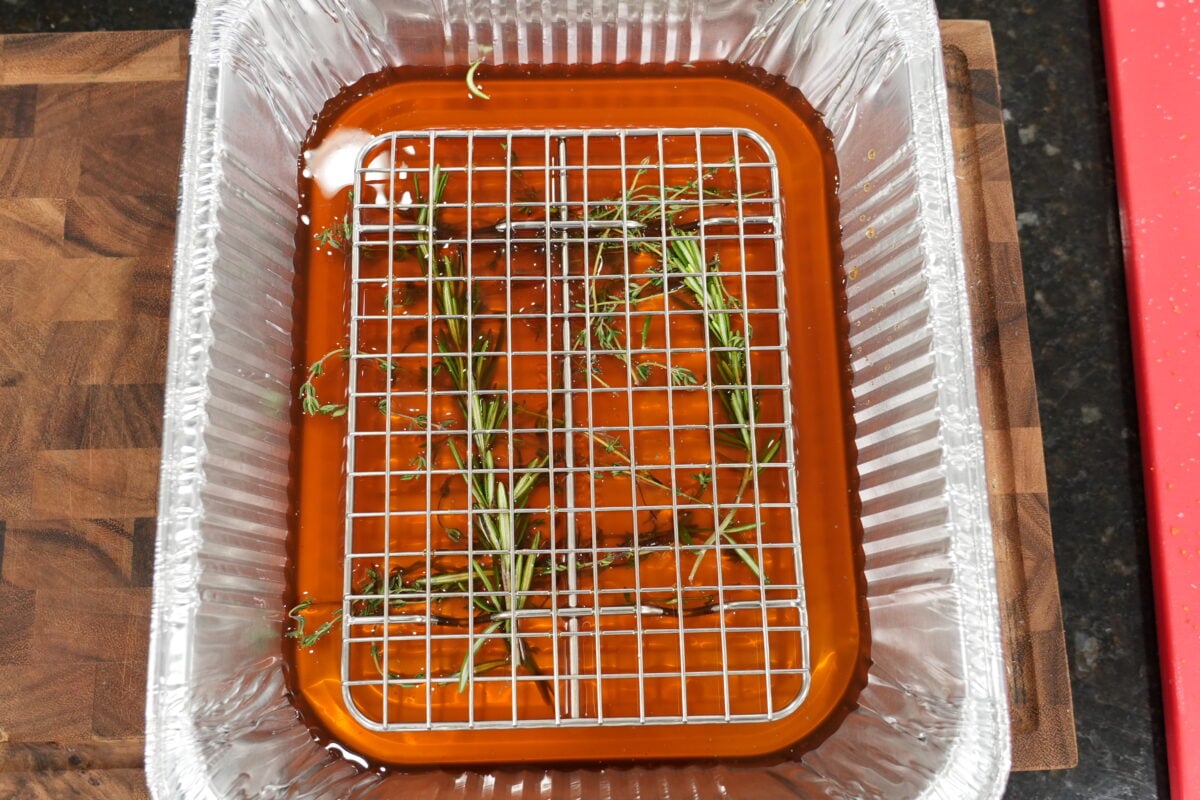
- First, build the pan. Place a wire rack inside a half-size foil pan or oven-safe casserole dish. Add quartered onion, smashed garlic, and thyme to the bottom of the pan. Pour in beef stock — about half an inch deep, just enough to create a steamy environment without submerging the meat.
- Next, place ribs on the rack. The ribs sit on the wire rack above the liquid, not in it. Cover the entire pan tightly with aluminum foil.
- Then, roast covered for 2 hours. Check at the 2-hour mark — you're looking for the meat to start pulling away from the bones. Re-cover and continue roasting.
- After that, check for probe tenderness around 3 hours. Insert a thermometer or toothpick into the thickest part of the meat. It should slide in and out with very little resistance. Internal temp should be 200-205°F.
- Next, uncover and reset the bark. Once probe tender, remove the foil. The steam softens the bark, so we need to let it firm back up. Return the pan to the oven uncovered for 20-30 minutes.
- Finally, glaze with BBQ sauce. Brush BBQ sauce generously over the ribs. Return to the oven 10-15 minutes until the sauce sets and caramelizes. Total cook time is roughly 3.5-4 hours.
- After that, rest before slicing. Let the ribs rest 15 minutes before slicing between the bones. This is critical — slicing too early means the juices run out instead of staying in the meat.

Restaurant-Style Beef Ribs with Asian BBQ Glaze
This is the version of oven beef ribs I serve at the restaurant — same cut, same probe-tender target, but a completely different flavor profile. French-Asian fusion: a deeply layered braise instead of a steam, then finished with a from-scratch Asian BBQ glaze that’s good on basically anything (pork, chicken, beef — I haven’t found a protein it doesn’t elevate).
- Then, cut the ribs into individual bones. At the restaurant each bone is a single serving. Individual ribs also cook faster.
- Season with AP Seasoning and sear hard in a hot skillet — all sides, deep brown crust. This is your flavor foundation.
Building the Asian BBQ Glaze
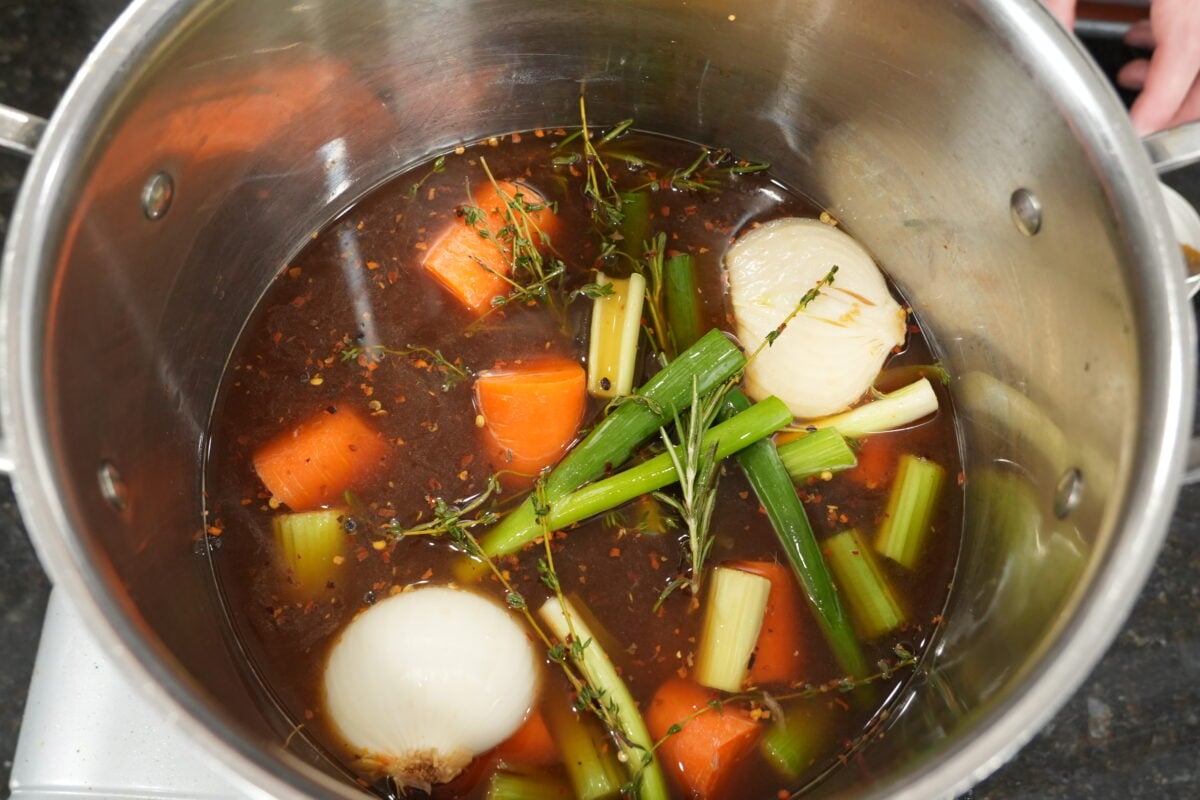
- Meanwhile, build the braising liquid. In a large pot, toast onion, carrots, celery, green onion, peppercorns, and red pepper flakes over medium heat for 3-4 minutes until they start to release moisture and aroma.
- Then, add 4 cups beef stock + 1 tablespoon Better Than Bouillon. Bring to a boil.
- Next, add soy sauce, rice vinegar, and brown sugar. Reduce to a simmer for 30-45 minutes. Strain the liquid — keep the liquid, discard the solids.
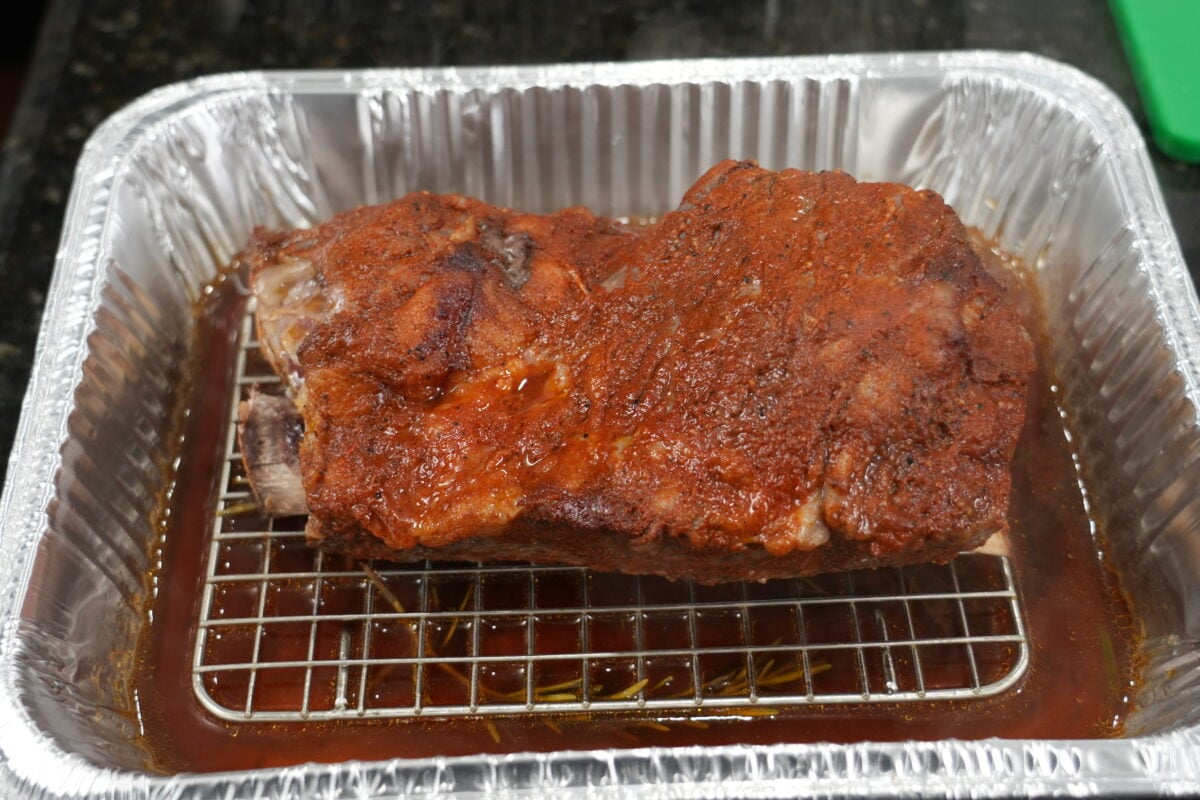
- Now, braise the ribs. Place seared ribs on a wire rack in a foil pan. Pour in the strained braising liquid until the ribs are 30-40% submerged (not fully). Cover with foil.
- Then, oven at 300°F for ~2.5 hours. Check at 2 hours. Cook until probe tender (203-205°F internal).
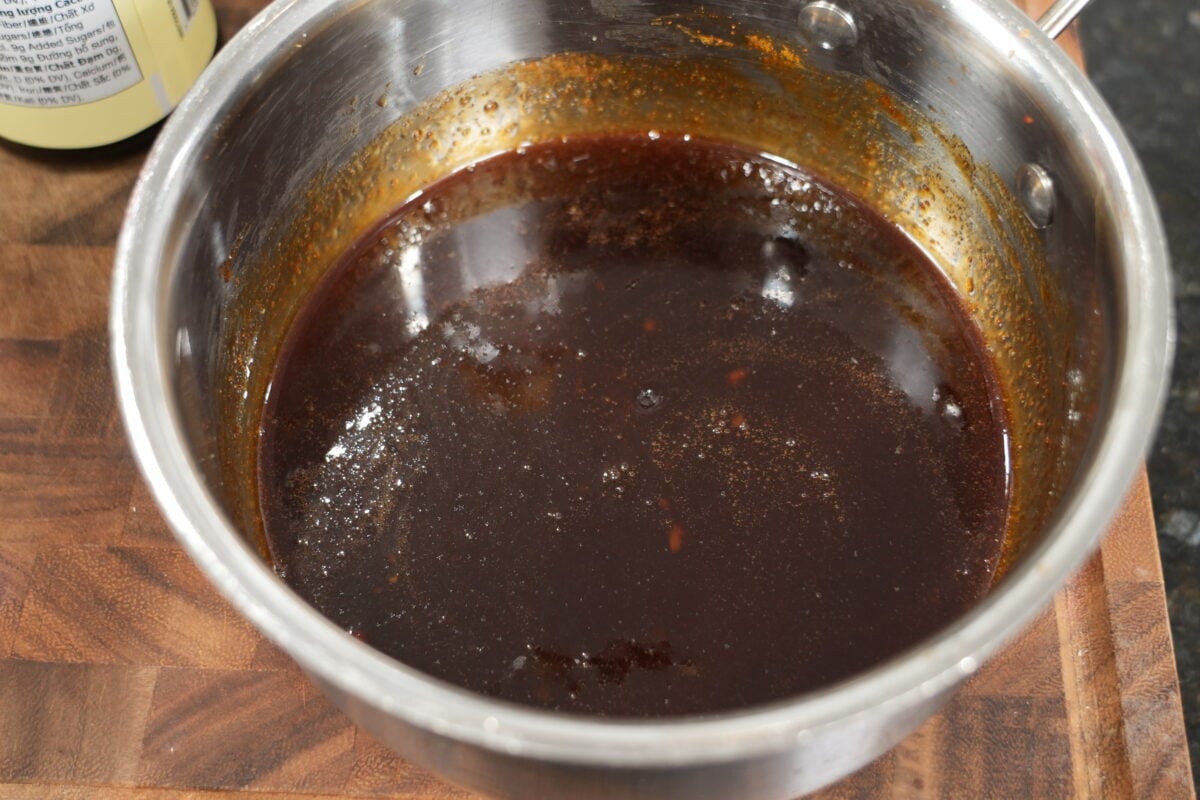
- Meanwhile, make the Asian BBQ glaze while the ribs braise. In a saucepan, combine brown sugar, hoisin, rice vinegar, fish sauce, and gochujang. Whisk over medium heat until smooth. Bring to a simmer, then kill the heat. Taste and adjust — more brown sugar for sweetness, more gochujang for heat.
- After that, uncover and drain most of the braising liquid. You want the ribs to roast and crisp, not continue braising.
- Then, brush with the Asian BBQ glaze. Return to the oven uncovered for 10-15 minutes until the glaze caramelizes and gets sticky.
- Plate. These are restaurant-pretty. Slice each bone individually, brush with extra glaze, and garnish with sliced green onion and toasted sesame seeds.
Pro Tips for Perfect Beef Ribs
- Above all, don't skip the brine. Even 4 hours of salt brining beats any amount of last-minute seasoning. The salt has to penetrate the meat, and that takes time you can't shortcut.
- In fact, MSG is misunderstood. It's not bad for you (the science is clear), and it deepens savory flavor in a way salt alone can't. If you're not using it, you're cooking with one hand behind your back. But it's optional — the recipe still works without it.
- Similarly, probe tender beats temperature. Different ribs reach probe tenderness at slightly different temps. The thermometer is a guide; the probe-slide test is the truth.
- Cover, then uncover. The covered braise breaks down the connective tissue. The uncovered finish resets the bark and lets the glaze caramelize. Skip either step and the texture suffers.
- Additionally, save the trimmed fat. Render it down low and slow in a pot or oven. You'll have homemade beef tallow that turns roasted potatoes, fries, and steak searing into a different conversation entirely.
- Also, try the two-finger lift test. Truly done ribs will bend dramatically when you lift one end with tongs — almost folding in half before the bark cracks. If it stays stiff, give it more time.
Storing and Reheating Beef Ribs
- Fridge: Store leftover ribs in an airtight container with a splash of the braising liquid (or beef stock) for up to 4 days.
- Freezer: Wrap individual ribs in plastic, then foil, then freeze in a zip-top bag for up to 3 months. Thaw overnight in the fridge before reheating.
- Reheat in the oven: 300°F, covered, with a splash of beef stock to keep moist, 20-25 minutes until heated through. Uncover the last 5 minutes to crisp the exterior.
- Don't microwave. Microwaving fall-apart braised meat turns it stringy and dry. Always use the oven.
Frequently Asked Questions
Beef ribs take about 3.5 to 4 hours in a 300°F oven for a full plate rib roast. Beef back ribs take 2.5 to 3 hours. The cook is broken into a covered braise (about 75% of the time) followed by an uncovered finish where the bark resets and the BBQ glaze caramelizes. Always cook to probe tenderness — 200 to 205°F internal — not to a fixed time.
Beef ribs are fully cooked when the internal temperature reaches 200 to 205°F and a probe slides in and out of the thickest part of the meat with almost no resistance. This is significantly higher than steak doneness temperatures because beef ribs are cooked low and slow specifically to break down collagen and connective tissue, which only happens above 195°F.
Beef short ribs are cut from the chuck or plate primal and are typically sold as smaller, thicker individual bones. Plate ribs (also called dino ribs) are massive four-bone roasts from the short plate section, with much more meat per bone and dramatic presentation. Beef back ribs come from the rib roast section and have the least meat but excellent flavor. All three work in this recipe — just adjust the cook time based on size.
Yes. This recipe is specifically designed for the oven. Smoked paprika adds a subtle smoky note, and the covered braise step recreates the steamy environment that mimics what happens in a smoker's first cook stage. The result is fall-off-the-bone tender ribs with real bark — without owning a smoker.
Salt brining (dry brining) seasoned ribs hours or even a full day before cooking lets the salt penetrate beyond the surface. The salt initially draws moisture out, then that moisture gets reabsorbed carrying the salt with it — seasoning the meat all the way to the bone. Four hours is the minimum to see results. Twenty-four hours is ideal for plate ribs and other thick cuts.
Related Recipes
- Steak Diane Recipe (Restaurant-Quality at Home)
- Steakhouse Burger Recipe
- Spicy Ground Beef and Cabbage Skillet
For more BBQ classics and slow-cooked comfort food, check out my full comfort food recipes collection.
Get the Full Recipes
Easy Sunday Cookout Beef Ribs Recipe
Love this recipe? You'll love my seasonings even more!
Level up your cooking with my signature AP Seasoning, Cajun Seasoning, and more.
Shop My SeasoningsMake It Happen in Your Kitchen
Level up every recipe with my signature seasonings, cookware & bundles.
Easy Oven Beef Ribs (Sunday Cookout Style)
Ingredients
- 1 four-bone plate rib roast or 1 rack beef back ribs 4-6 lbs
- Kosher salt heavy hand
- 1 teaspoon MSG optional but recommended
- 2 tablespoons smoked paprika
- 3-4 tablespoons BBQ Seasoning or your favorite BBQ rub
- 2 cups beef stock
- 1 yellow onion quartered
- 4 cloves garlic smashed
- 2 sprigs fresh thyme
- Your favorite BBQ sauce for finishing
Instructions
- Brine the ribs 4-24 hours ahead. Pat dry, trim hard fat, season heavily with kosher salt on all sides. Place uncovered on a wire rack over a sheet pan and refrigerate.
- Preheat the oven to 300°F.
- Season heavily with MSG (if using), smoked paprika, and a thick layer of BBQ Seasoning. Press into the meat for a real crust.
- Build the pan. Place a wire rack in a foil pan. Add quartered onion, smashed garlic, and thyme to the bottom. Pour in beef stock about half an inch deep.
- Place ribs on the rack above the liquid. Cover the entire pan tightly with aluminum foil.
- Roast covered for 2 hours. Check that meat is pulling away from the bones. Re-cover and continue.
- Check for probe tenderness around 3 hours. A probe should slide in and out with little resistance. Internal temp should be 200-205°F.
- Uncover and reset the bark. Return to the oven uncovered for 20-30 minutes to firm up the crust.
- Glaze with BBQ sauce. Brush generously and return to the oven 10-15 minutes until caramelized.
- Rest 15 minutes before slicing between the bones. This keeps the juices in the meat.
Video
Notes
Nutrition
Restaurant-Style Asian BBQ Beef Ribs Recipe
Restaurant-Style Asian Beef Ribs with Hoisin Gochujang Glaze
Ingredients
For the Ribs
- 1 four-bone plate rib roast cut into individual bones
- 1 tablespoon AP Seasoning for searing
- Kosher salt for brining
For the Braising Liquid
- 1 yellow onion rough chopped
- 3 carrots rough chopped
- 3 stalks celery rough chopped
- 1 bunch green onions
- 1 tablespoon whole black peppercorns
- 1 teaspoon red pepper flakes
- 1 tablespoon roasted garlic Better Than Bouillon or beef base
- 4 cups beef stock
- ¼ cup low-sodium soy sauce
- 3 tablespoons rice vinegar
- 3 tablespoons brown sugar
For the Asian BBQ Glaze
- ⅓ cup brown sugar
- ½ cup hoisin sauce
- 2 tablespoons rice vinegar
- 1 tablespoon fish sauce
- 2 tablespoons gochujang Korean fermented chili paste
Instructions
- Cut the ribs into individual bones. Each bone is a single serving.
- Season with AP Seasoning and sear hard in a hot skillet on all sides until deeply browned.
- Build the braising liquid. Toast onion, carrots, celery, green onion, peppercorns, and red pepper flakes over medium heat for 3-4 minutes.
- Add 4 cups beef stock and Better Than Bouillon. Bring to a boil.
- Add soy sauce, rice vinegar, and brown sugar. Simmer 30-45 minutes, then strain. Keep the liquid, discard solids.
- Place seared ribs on a wire rack in a foil pan. Pour in strained braising liquid until 30-40% submerged. Cover with foil.
- Roast at 300°F for about 2.5 hours. Check at 2 hours. Cook until probe tender (203-205°F internal).
- Make the Asian BBQ glaze. Combine brown sugar, hoisin, rice vinegar, fish sauce, and gochujang in a saucepan. Whisk over medium heat until smooth, simmer, then remove from heat.
- Uncover ribs and drain most of the braising liquid.
- Brush with Asian BBQ glaze. Return to the oven uncovered 10-15 minutes until caramelized and sticky.
- Plate individually, brush with extra glaze, and garnish with sliced green onion and toasted sesame seeds.
Video